


The primary objective of the Advanced Materials Technologies School is to facilitate advanced expertise in the selection, design, manufacturing, and testing of materials tailored to the specific requirements of the defence industry through a comprehensive blend of theoretical and applied learning modules.
The Advanced Materials Technologies School offers a high-calibre educational environment underpinned by internationally recognised instructional methodologies and state-of-the-art infrastructure. The programs incorporate a combination of theoretical instruction, simulation exercises, hands-on training, and analysis-driven workshops. Training management processes are aligned with quality assurance standards and are subject to continuous improvement cycles.
The Advanced Materials Technologies School is intended for engineers, technical personnel, managers, analysts, and other professionals operating within the defence industry and related sectors who seek to acquire fundamental or advanced expertise in the field of electronic warfare.
The training programs are implemented through a collaborative approach involving seasoned industry professionals and academics with sector-specific experience. An Expert Advisory Board, established within this framework, articulates the strategic vision of the Advanced Materials Technologies School and periodically provides consultative input on curriculum development.
The "Expert Advisory Board (EAB)" within the Advanced Materials Technologies School provides recommendations and guidance on the following topics:
The "Coordinators" within the Advanced Materials Technologies School operate in line with the needs of the defense industry and are responsible for:
You can create a preliminary request for an existing course by selecting it from the "Courses" list and filling in the relevant sections under the "Request" tab.
You can create a preliminary request for an existing course by selecting it from the "Courses" list and filling in the relevant sections under the "Request" tab.
If the course you need is not in the existing list or requires customization, you can submit the course content, location, and preferred instructor (if any) here.
If the course you need is not in the existing list or requires customization, you can submit the course content, location, and preferred instructor (if any) here.

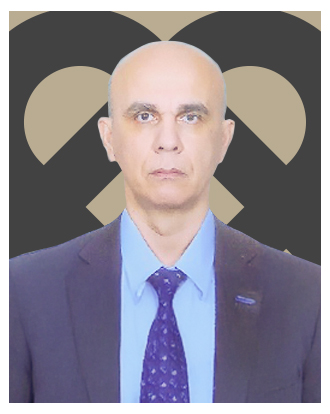
Prof. Dr. Ziya Esen
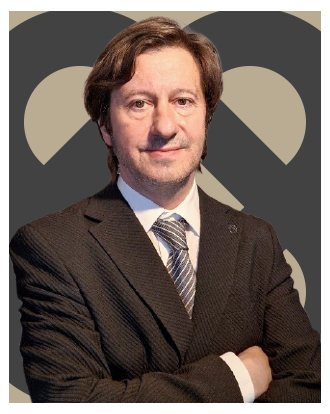
Dr. M. Kaan Pehlivanoğlu

Dr. Necmettin Kaan Çalışkan
Hakan Der
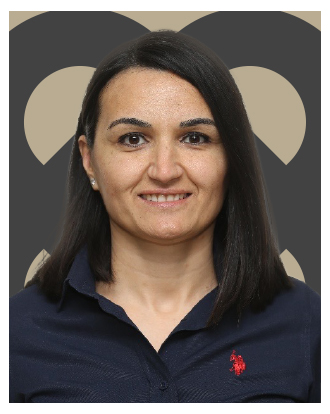
Rabia Günay
Comprehensive training on fundamentals, applications, methods, and technology trends in additive manufacturing (AM) for polymers, metals, ceramics, composites, and biomaterials, including design, post-processing, quality, and industry-specific roadmaps.
Although additive manufacturing (AM) processes were introduced over thirty-five years ago, they have only recently attracted major industrial and consumer interest. Beginning with personal-scale production, AM holds the potential to fundamentally transform traditional supply chains. It has become a preferred method in aerospace and defense sectors for producing complex geometries, and efforts are underway to enable its use in NATO operations.
This training program aims to provide a comprehensive overview of additive manufacturing, from fundamental concepts to applications and current technology trends. Participants will learn the basic principles of AM using various materials such as polymers, metals, ceramics, composites, and biomaterials. They will also understand how process capabilities (in terms of rate, cost, and quality) are shaped by material properties, process parameters, and machine design constraints.
The training will be delivered in a classroom setting such as a meeting or briefing room, using a whiteboard, projector, computer, and MS Office tools. Approximately 75% of the course will be conducted through classroom instruction supported by presentation files, while 25% will consist of group work involving case studies.
-
Participants are expected to have an undergraduate degree in core engineering or science disciplines, primarily in Materials Science and Engineering or Mechanical Engineering.
This training covers the classification, designation, production techniques, heat treatment, standards, and general properties of metallic materials used in aerospace and defense—focusing on steel, aluminium, superalloys, and titanium alloys.
Engineering applications greatly benefit from a clear understanding of the classification, designation, production techniques, heat treatment processes, and overall properties of metallic materials used in the aerospace and defence sectors. This training will provide general information about aluminium alloys, superalloys, titanium alloys, and iron-based alloys, along with insights into international standards and the concept of equivalent materials.
The objective of this course is to enable participants to acquire knowledge of the designation, structures, fundamental properties, production, and heat treatment processes of metallic materials and to comprehend the terminology used in various standards and specifications.
The training will be conducted in a classroom setting, such as a meeting or briefing room, using a whiteboard, projector, computer, and MS Office tools. The instruction will be theoretical in nature.
-
Participants are required to have a bachelor's degree in engineering field.
Theoretical and practical insight into composite material design, mechanics, types, manufacturing, testing, applications, emerging topics, and sustainability—with focus on defence, aerospace, and energy sectors.
In the field of defence, the demand for next-generation materials and technologies with high strength, lightweight, and ballistic properties is increasing steadily. Composite materials, which are composed of at least two different materials combined to achieve optimized properties, are tailored to meet various application-specific requirements. Especially in ballistic applications, a wide variety of composite selections are available. Moreover, material density is a critical factor in aerospace and rocket applications. One additional advantage of polymeric composites used in such contexts is their resistance to degradation mechanisms such as corrosion.
This training aims to cover the design, mechanics, types, manufacturing processes, testing methods, and application areas of composite materials.
The training will be conducted theoretically in a classroom setting such as a meeting or briefing room, utilizing a whiteboard, projector, computer, and MS Office tools. Lecture presentations will be supported by selected YouTube videos and reinforced through sample case studies and design exercises.
-
Participants are expected to have a bachelor's degree in Basic Sciences or Engineering.
Training on fundamental properties, selection methodologies, Ashby diagrams, and optimal decision making for materials used in mechanical design—including sustainability, manufacturing methods, and cost evaluation.
Materials selection is a critical step in the mechanical design process, directly influencing product performance, cost, manufacturing methods, and environmental impact. This training aims to teach participants the fundamental properties of engineering materials and the methodologies used in the materials selection process. The course specifically focuses on enabling participants to make optimal design decisions using M.F. Ashby’s material selection diagrams.
The training will be conducted in a meeting or briefing room-style classroom environment using whiteboards, projectors, computers, and MS Office tools. It will include presentations, case studies, material analysis using Ashby diagrams, interactive materials selection exercises with software tools, group work, and solving design problems.
-
Participants are expected to have a bachelor's degree in Materials Science, Mechanical Engineering, or a related engineering or science discipline.
An essential course on welding principles, process types, material behaviors during welding, welded design, quality control, and basic inspection techniques for all manufacturing sectors.
Welding technology is widely utilized across all manufacturing sectors that require the joining of materials. As material technologies continue to evolve, the welding processes applied to these materials have become increasingly complex. The fundamental principle is to minimize damage to the materials during the welding process while maintaining the mechanical and metallurgical properties of the welded joints within the safety margins required by the intended application.
Accordingly, fundamental welding training not only introduces various welding methods but also covers materials and their behaviour during welding. Additionally, essential welding design knowledge, deformation and residual stress due to welding, corrosion-related problems, basic inspection techniques, and quality assurance methods form critical parts of the training. This course aims to provide an introductory level understanding of welding methods, materials and their behaviour during welding, welded design principles, welding-induced corrosion and stress issues, inspection techniques, and quality assurance practices.
The training will be conducted in a meeting or briefing room-style classroom setting using a whiteboard, projector, computer, and MS Office tools. A portion of the course will be delivered through presentations, supported by selected YouTube videos. Additionally, case analyses and design exercises will be carried out.
Participants are expected to have a bachelor's degree in Basic Sciences or Engineering.
Understand kinematics, kinetics, energy, momentum, analytical dynamics and mechanical vibrations with practical examples in this essential dynamics course.
This training aims to explain the concepts of kinematics and kinetics of particles and rigid bodies, as well as work, energy, impulse, momentum, and mechanical vibrations, through illustrative examples.
The training will be delivered theoretically in a classroom environment modeled after a meeting or briefing room, utilizing a whiteboard, projector, computer, and MS Office tools.
The target group comprises executives operating in the GNC field.
Participants are expected to have a high school-level understanding of physics.
Explore the fundamentals of aerodynamics and flow types, including incompressible and compressible flows, through theory and practical understanding.
This training aims to explain the fundamental principles of aerodynamics and various flow types through illustrative examples.
The training will be conducted in a classroom setting, resembling a meeting or briefing room, using a whiteboard, projector, computer, and MS Office tools to facilitate theoretical instruction.
The target group of the training consists of engineers working in the field of aerodynamics.
Participants are required to have completed the Fundamentals of Dynamics training.
Gain foundational knowledge of flight mechanics, including lift, flight controls, maneuvers, and stability concepts, supported by simulation practices.
This training aims to define the fundamental concepts addressed within the scope of flight mechanics. Additionally, the course will explain—through practical examples—topics such as lift enhancement, flight control surfaces, steady-level flight, basic maneuvers, and flight stability.
This training will be conducted in a classroom setting resembling a meeting or briefing room, using a whiteboard, projector, computer, and MS Office tools to support theoretical instruction. In addition, participants will perform computer-based simulations using pre-planned scenarios on computers equipped with MATLAB® software.
The target group of the training consists of engineers working in the field of flight mechanics.
Participants are required to have completed the introductory-level Fundamentals of Dynamics training and have knowledge of MATLAB® software.
Learn the core principles and key methods of the GNC framework, including simulation-based applications and integrated system development.
This training aims to define the fundamental methods and related concepts within the scope of the guidance, navigation, and control (GNC) approach. Additionally, it is intended to explain the primary fields and key applications in which GNC techniques are employed.
This training will be conducted in a classroom setting resembling a meeting or briefing room, using a whiteboard, projector, computer, and MS Office tools to support theoretical instruction. In addition, participants will perform computer-based simulations using pre-planned scenarios on computers equipped with MATLAB® software.
The target group of the training consists of engineers working in the field of guidance, navigation, and control (GNC).
Participants are expected to have completed the introductory-level Fundamentals of Dynamics training and to be familiar with MATLAB® software.
Build foundational knowledge of MATLAB® and Simulink® for simulations in the GNC domain with practical hands-on examples.
This training aims to provide a foundational understanding of the main functions and usage of the commercial software MATLAB® and its Simulink® module, which are widely used in simulation and computational studies in the GNC (Guidance, Navigation, and Control) domain.
The training will be conducted in a classroom setting, designed like a meeting or briefing room, using a whiteboard, projector, computer, and MS Office tools for theoretical instruction. Additionally, hands-on applications will be provided on computers equipped with MATLAB® software.
The target group comprises technicians, technologists, and engineers engaged in the field of computer-based simulation.
Participants are expected to have basic knowledge of computers and programming.
Understand key guidance methods in GNC systems and analyze their applications with real-world simulations and case studies.
This training aims to explain the main guidance methods addressed within the scope of the guidance, navigation, and control (GNC) approach. Additionally, it is intended to provide practical examples related to the identified methods.
The training will be conducted in a classroom setting, designed like a meeting or briefing room, using a whiteboard, projector, computer, and MS Office tools for theoretical instruction. Additionally, computer simulations will be performed by the participants on MATLAB®-equipped systems, based on predefined scenarios.
The target group of this training is engineers working in the field of GNC.
Participants are required to have completed the advanced-level "Major Guidance Methods and Applications" training and have knowledge of MATLAB® software.
Learn essential navigation concepts including time systems, displacement calculations, magnetism, reference frames, GPS, and Kalman filters with practical examples.
This training aims to explain, through illustrative examples, the fundamental concepts of navigation, types of time, key displacement calculations, magnetism and compasses, reference frames, map projections, the use of flight computers, stochastic processes, global positioning systems, and Kalman filter applications.
This training will be conducted in a classroom setting, organized similarly to a meeting or briefing room, using a whiteboard, projector, computer, and MS Office tools for theoretical instruction. In addition, participants will carry out computer-based simulations using MATLAB® software installed on computers, following preplanned scenarios.
The target group of this training consists of engineers working in the field of guidance, navigation, and control (GNC).
Participants are required to have completed the advanced-level "Major Guidance Methods and Applications" training and have knowledge of MATLAB® software.
Enhance your understanding of navigation approaches through computer simulations carried out within operational scenarios based on fundamental navigation concepts.
This training aims to enhance the understanding of navigation approaches through simulations carried out within operational scenarios developed based on fundamental navigation concepts and corresponding computer models.
This training will be delivered in a classroom setting, designed like a meeting or briefing room, using a whiteboard, projector, computer, and MS Office tools for theoretical instruction. Additionally, participants will conduct simulation exercises on computers equipped with MATLAB® software, following pre-defined scenarios.
The target group of this training is engineers working in the field of guidance, navigation, and control (GNC).
Participants are required to have completed the advanced level Major Navigation Approaches and Applications training and possess prior knowledge of MATLAB® software.
Covers control system fundamentals including transfer functions, system modeling, classical control methods, and MATLAB® Simulink® simulations.
The aim of this training is to cover the similar characteristics and modeling of physical systems, the linearization of nonlinear systems under certain conditions, the derivation of transfer functions, and the drawing of block diagrams. Additionally, it aims to address control systems and their types, basic classical control approaches, system responses, and the concept of stability.
This training will be conducted theoretically in a classroom environment using a whiteboard, projector, computer, and MS Office tools. Additionally, participants will perform computer simulations on computers with MATLAB® software, based on pre-planned scenarios.
The target group for this training is engineers working in the field of GNC.
Participants are required to have attended the basic-level training on "Fundamentals of Dynamics" and to have knowledge of MATLAB® software.
Learn advanced programming, debugging, optimization, and data analysis techniques in MATLAB® and Simulink® environments.
This training aims to explain, at an advanced user level, the higher-level functions and usage of the commercial software MATLAB®—commonly used in simulation and computational studies in the GNC (Guidance, Navigation, and Control) domain—along with its Simulink® module.
This training will be conducted theoretically in a classroom setting (in the form of a meeting or briefing room), using a whiteboard, projector, computer, and MS Office tools. Additionally, hands-on exercises will be carried out on computers equipped with MATLAB® software.
The target group for this training includes technicians, technologists, and engineers working in the field of computer-based simulation.
Participants are required to have attended the "MATLAB® Simulink® Usage – Basic Level" training.
Explore cutting-edge topics such as AI, sensor fusion, SLAM, swarm intelligence, model predictive control, and quantum navigation for GNC applications.
This training aims to define recently popularized approaches such as artificial intelligence, sensor fusion, simultaneous localization and mapping, and swarm intelligence, and to explore their applicability to the field of GNC (Guidance, Navigation, and Control). Additionally, model predictive control and quantum navigation techniques—encountered in current applications—will be explained.
This training will be conducted theoretically in a classroom setting designed as a meeting or briefing room, using a whiteboard, projector, computer, and MS Office tools.
The target group of this training includes engineers working in the GNC field.
Participants are required to have attended the advanced-level training titled “Major Guidance Methods and Applications.”
Understand the architecture and subsystems of GNC loops including seeker heads, control drives, IMUs, and INS technologies.
This training aims to explain the general structure and primary functions of the guidance, navigation, and control loops, as well as the subsystems that constitute the loop, such as seeker heads, control drive systems, inertial measurement units, and inertial navigation systems.
This training will be conducted theoretically in a classroom-style environment, using a whiteboard, projector, computer, and MS Office tools.
The target group for this training consists of engineers working in the GNC field.
Participants are required to have attended the advanced-level training on “Major Guidance Methods and Applications.”
Explore key GNC sensors including gyroscopes, accelerometers, altimeters, compasses, and GNSS used in modern avionics and control systems.
This training aims to explain gyroscopes, accelerometers, altimeters, and magnetic compasses, which are used to measure kinematic variables determined within subsystems such as the main system, seeker head, and control actuation system that are part of the guidance, navigation, and control loops.
This training will be conducted theoretically in a classroom-style environment, using a whiteboard, projector, computer, and MS Office tools.
The target group for this training consists of engineers working in the GNC field.
Participants are required to have attended the advanced-level training on “Major Guidance Methods and Applications.”
Learn the purposes and scopes of SIL, PIL, and HIL tests and how they support subsystem performance validation through structured verification methods.
This training aims to explain the purposes and scopes of computer-in-the-loop tests conducted at the software, hardware, and processor levels for the main and subcomponents within guidance, navigation, and control (GNC) loops. It also covers verification methods such as analyses, demonstrations, and reviews performed to validate the performance of the aforementioned units.
This training will be conducted theoretically in a classroom-style environment, using a whiteboard, projector, computer, and MS Office tools.
The target group of the training is engineers working in the field of guidance, navigation, and control (GNC).
Participants are expected to have completed the introductory-level training on the Fundamentals of Guidance, Navigation, and Control.
Explore how guidance, navigation, and control (GNC) techniques are applied to unmanned ground, marine, and aerial vehicles using real-world examples.
This training aims to explain the application of guidance, navigation, and control (GNC) approaches in unmanned vehicles, based on example systems.
This training will be conducted theoretically in a classroom setting designed as a meeting or briefing room, using a whiteboard, projector, computer, and MS Office tools.
The target group of this training includes engineers working in the GNC field.
Participants are required to have attended the fundamental-level training titled “Fundamentals of Guidance, Navigation, and Control”.
Understand how guidance, navigation, and control (GNC) techniques are applied in robotic systems through selected real-world examples.
This training aims to explain the application of guidance, navigation, and control (GNC) approaches in robotic systems, using selected example systems as the basis for instruction.
This training will be conducted theoretically in a classroom setting designed as a meeting or briefing room, using a whiteboard, projector, computer, and MS Office tools.
The target group of this training includes engineers working in the GNC field.
Participants are required to have attended the fundamental-level training titled “Fundamentals of Guidance, Navigation, and Control”.
Explore the use of GNC approaches in spacecraft with examples covering modeling and application scenarios.
This training aims to explain the application of guidance, navigation, and control (GNC) approaches to spacecraft, based on representative example systems.
This training will be conducted theoretically in a classroom environment designed as a meeting or briefing room, using a whiteboard, projector, computer, and MS Office tools.
The target group of this training consists of engineers working in the GNC field.
Participants are required to have attended the fundamental-level training on the Fundamentals of Guidance, Navigation, and Control.
Advanced insights into robotic systems, target tracking, modeling, optomechanics, orbital mechanics, and spacecraft dynamics supported with example simulations.
This training aims to present topics such as robotic and autonomous systems, electromechanical systems, target detection and tracking, modeling and simulation, optomechanical systems, orbital mechanics, and the dynamics and control of spacecraft, supported by relevant example applications.
This training will be conducted theoretically in a classroom environment arranged in a meeting or briefing room style, using a whiteboard, projector, computer, and MS Office tools. In addition, computer simulations will be conducted by participants on pre-designed scenarios using computers equipped with MATLAB® software.
The target audience for this training includes engineers working in the field of GNC.
Participants are required to have attended the advanced-level training on “Major Guidance Methods and Applications.” and have prior knowledge of MATLAB® software.
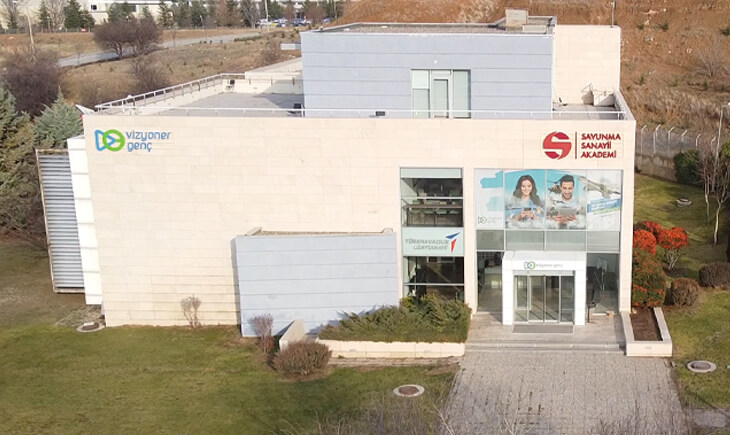
Savunma Sanayii Akademi
Üniversiteler Mahallesi ODTÜ TEKNOKENT, 06800, Çankaya/Ankara/Türkiye
+90 312 424 19 62
akademi@ssb.gov.tr